The winter bake worth making on a Sunday — and returning to every week until the weather changes.
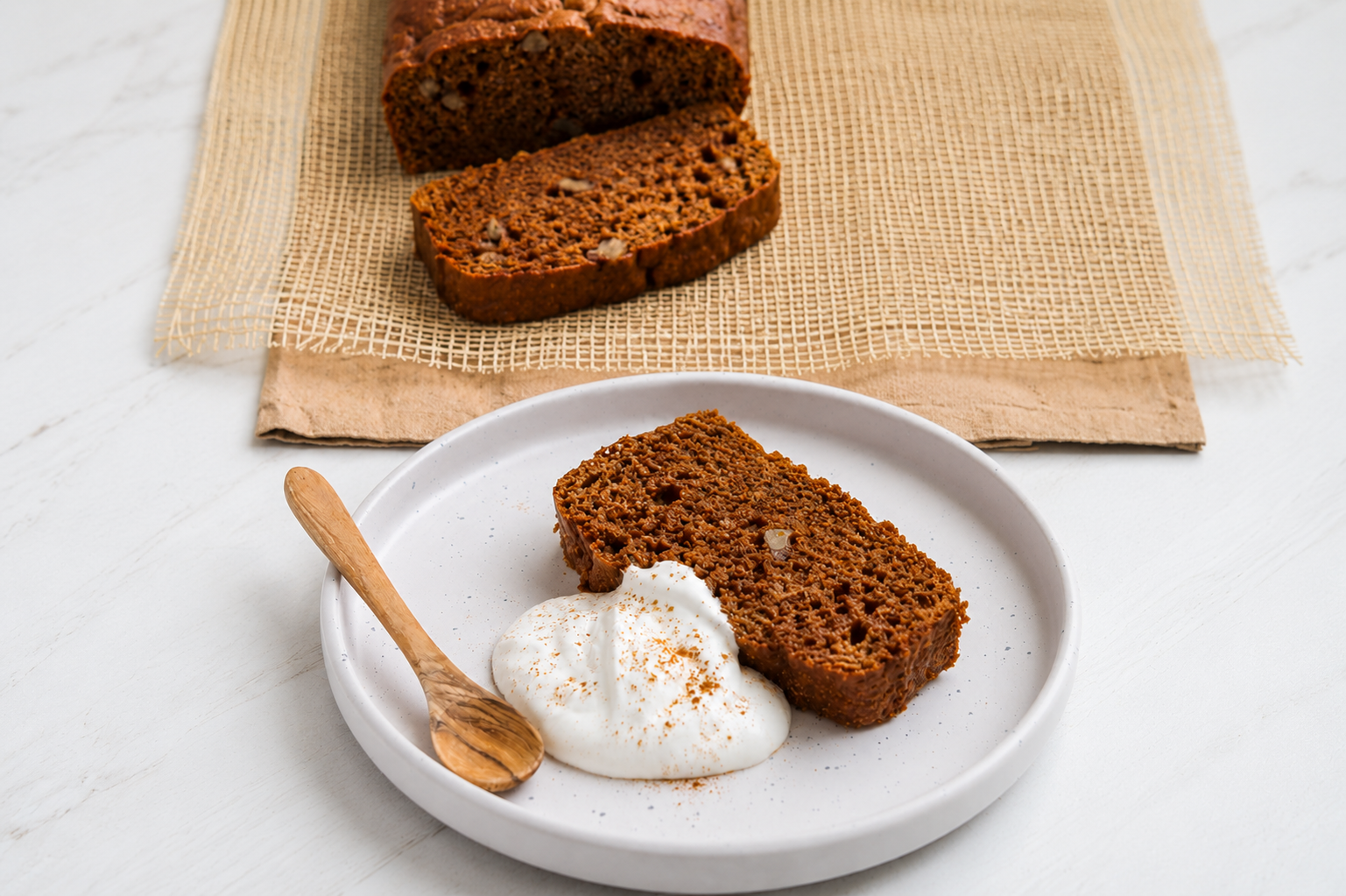
There is something about the smell of pumpkin bread baking that is uniquely suited to winter. Not the sharp, caramelising smell of something being seared in a hot pan — the slow, spreading warmth of spice and sweetness that fills the house gradually and makes the temperature outside feel slightly less relevant. It is the kind of smell that makes a Sunday feel like a Sunday.
I came to pumpkin bread later than most. For years I assumed it was primarily an American thing — something seasonal and charming but not quite mine. Then I spent a winter making it on a rotation and understood what all the fuss was about. Not the American spiced latte version, sweetened to the point of obscuring the pumpkin entirely, but something quieter and more honest — a bread that tastes of pumpkin first, spice second, and sweetness last, where it belongs.
This version has a density and moisture that keeps it good for days rather than hours, which is the most important quality a weekend bake can possess. Make it on Sunday. Slice it through the week. Toast it on Thursday and wonder why you waited so long to have it in your life.
Why Pumpkin in Bread?
Pumpkin does several things in a quick bread that few other vegetables can match. Its high moisture content keeps the crumb from drying out, which is why a well-made pumpkin bread stays soft and tender for three or four days after baking — something most quick breads cannot claim. Its natural sweetness means you need considerably less added sugar than other fruit or vegetable breads require. And its colour turns the crumb a deep, warm orange that makes the finished loaf look considerably more impressive than the effort involved would suggest.
In Australia, pumpkin is a winter vegetable in the truest sense — abundant, affordable, and at its best in the cooler months. Roasting it concentrates its sweetness and drives off excess moisture, which produces a more intensely flavoured bread than using tinned pumpkin puree. The extra thirty minutes of roasting time is worth it. The difference in flavour is real.
Make it on Sunday. Slice it through the week. Toast it on Thursday and wonder why you waited so long to have it in your life.
The Spices That Matter
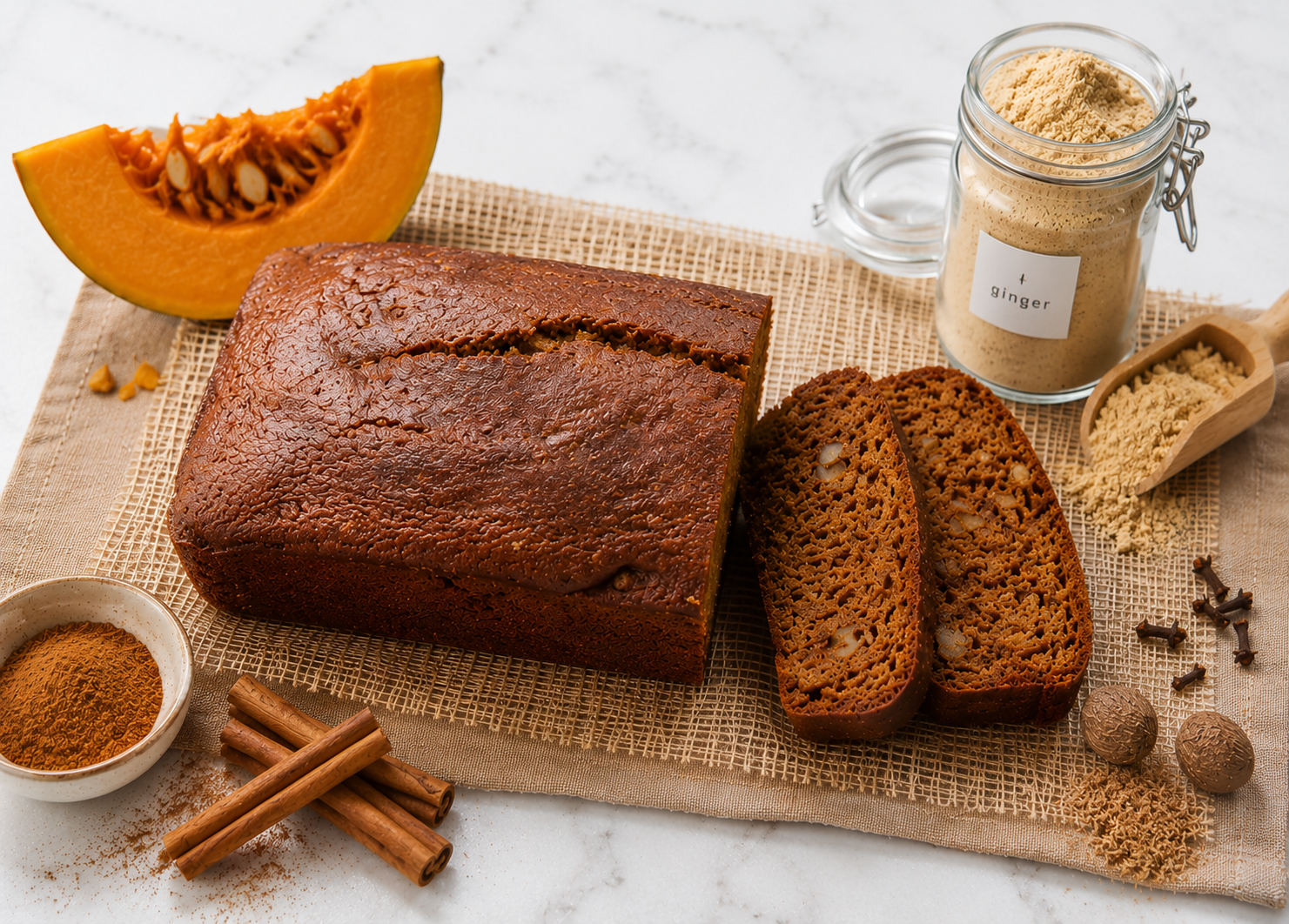
Cinnamon is non-negotiable. It is the backbone of the spice blend and the one that most people are already using when they think of pumpkin baking. But cinnamon alone produces a sweet and somewhat flat result — it needs companions to become interesting.
Ginger — dried, from a jar — adds a warmth that sits behind the cinnamon rather than competing with it, and supports digestion in a way that makes a slice of this bread genuinely easier on the stomach than a similarly sweet bake without it. Nutmeg, used sparingly, adds a depth that is difficult to identify but immediately noticeable in its absence. And a pinch of clove — just a pinch, it is easy to overdo — gives the whole spice blend an intensity that makes the bread taste like considerably more than its ingredients.
These are winter spices not just by convention but by function — warming to the body, supportive of circulation and digestion, and carrying compounds that have been shown to have anti-inflammatory and antimicrobial properties. They are not medicine, but they are not nothing. And they make the bread taste like exactly the right thing to eat in winter.
The Nutritional Case For Pumpkin
Pumpkin is one of the most nutritionally underestimated vegetables in the Australian kitchen. Its deep orange colour signals a high beta-carotene content — the precursor to vitamin A, which supports immune function, skin health, and vision. It is also a meaningful source of vitamin C, potassium, and fibre, and its low energy density means it adds substance and nutrition to baking without the caloric density of more common fruit breads.
A slice of this bread is not a health food in the clinical sense. It contains eggs, oil, and flour alongside the pumpkin and spices, and is intended to be enjoyed as food rather than consumed as medicine. But it is considerably more nourishing than a commercially produced baked product of similar sweetness, and it contains none of the additives or stabilisers required to keep mass-produced goods shelf-stable. It is real food, made simply, from ingredients you can name.
A Few Notes Before You Bake
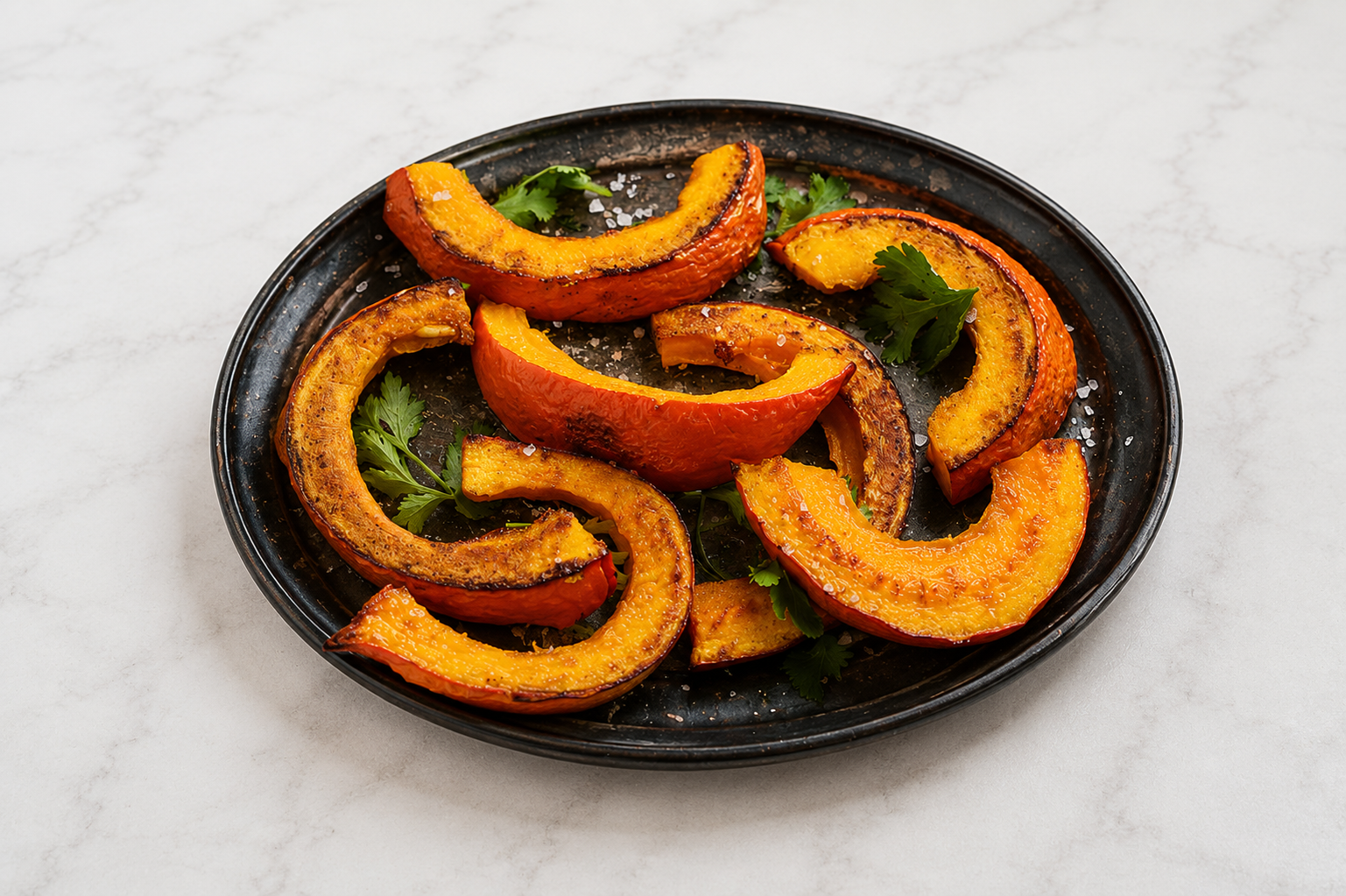
Roast the pumpkin until it is completely tender and beginning to caramelise at the edges — this concentrates the flavour significantly. Allow it to cool before mashing or blending, and drain away any liquid that has accumulated. Too much moisture in the puree will make the batter too wet and the final bread gummy rather than tender.
Don't overmix the batter. Quick breads require a light hand — stir until just combined and stop, even if there are a few small streaks of flour remaining. Overmixing develops gluten and produces a tough, dense bread rather than a tender one. The inconsistency you see in the unbaked batter will resolve itself in the oven.
Test for doneness with a skewer inserted into the centre — it should come out clean or with a few moist crumbs but no wet batter. The top should feel set when lightly pressed. If the top is browning faster than the centre is cooking, lay a piece of foil loosely over the tin for the last fifteen minutes.
Allow it to cool for at least fifteen minutes in the tin before turning out. Pumpkin bread is fragile when warm — it firms up as it cools, and the patience is worth the wait.
How To Use It Across The Week
Fresh from the oven it is warm and slightly soft, best eaten in thick slices with nothing on it except perhaps a little good butter if you're inclined. By day two it has firmed and deepened in flavour — toasted and served with ricotta and honey it becomes something that earns its place at the breakfast table without apology. By day three it makes an excellent afternoon accompaniment to tea, which in winter is not nothing.
It also freezes well in slices — wrap individually and freeze for up to two months. Toast from frozen in two minutes. This is the kind of weekend effort that pays dividends on the Tuesdays when breakfast is the last thing you have the energy to think about.
Spiced Pumpkin Bread
Dense, warmly spiced, and better every day it sits — the winter bake worth making on Sunday.
Prep: 15 min Cook: 55 min Serves: 10
Season: Autumn,Winter
Ingredients
400g pumpkin, peeled and cubed (roasted and mashed to give approximately 1 cup puree)
2 eggs, lightly beaten
80ml (⅓ cup) light olive oil or melted coconut oil
60ml (¼ cup) maple syrup or honey
1 teaspoon pure vanilla extract
200g (1⅓ cups) plain flour or spelt flour
1 teaspoon baking powder
½ teaspoon bicarbonate of soda
1½ teaspoons ground cinnamon
1 teaspoon ground ginger
¼ teaspoon ground nutmeg
Pinch of ground cloves
Pinch of sea salt
50g walnuts, roughly chopped (optional but recommended)
Method
Preheat your oven to 180°C (160°C fan-forced). Roast the pumpkin cubes on a lined tray for 25–30 minutes until completely tender and beginning to caramelise at the edges. Allow to cool, then mash thoroughly or blend until smooth. Drain away any excess liquid. You need approximately 1 cup of smooth puree.
Grease a standard loaf tin (approximately 20 x 10cm) and line with baking paper, leaving some overhang on the long sides for easy removal.
In a large bowl, whisk together the pumpkin puree, eggs, oil, maple syrup, and vanilla until smooth and well combined.
Sift the flour, baking powder, bicarbonate of soda, cinnamon, ginger, nutmeg, cloves, and salt directly into the wet mixture. Fold gently with a spatula until just combined — do not overmix. A few small streaks of flour are perfectly acceptable.
Fold through the walnuts if using. Pour the batter into the prepared tin and smooth the surface gently with the spatula.
Bake for 50–55 minutes, until a skewer inserted into the centre comes out clean or with a few moist crumbs. If the top is browning quickly, lay a piece of foil loosely over the tin for the last 15 minutes.
Allow to cool in the tin for 15 minutes before lifting out using the baking paper overhang. Cool on a wire rack for at least 15 minutes before slicing.
Store wrapped at room temperature for up to 4 days. Freezes well in individual slices — wrap tightly and freeze for up to 2 months. Toast from frozen in 2 minutes. Best on day two, when the spices have deepened and the crumb has firmed. If you can wait, do.
Michelle xx
For more seasonal recipes and practical wellness ideas delivered to your inbox each Monday, the Wellness for Everyday Living newsletter is free. → Subscribe here