How to Make a Really Good Stock
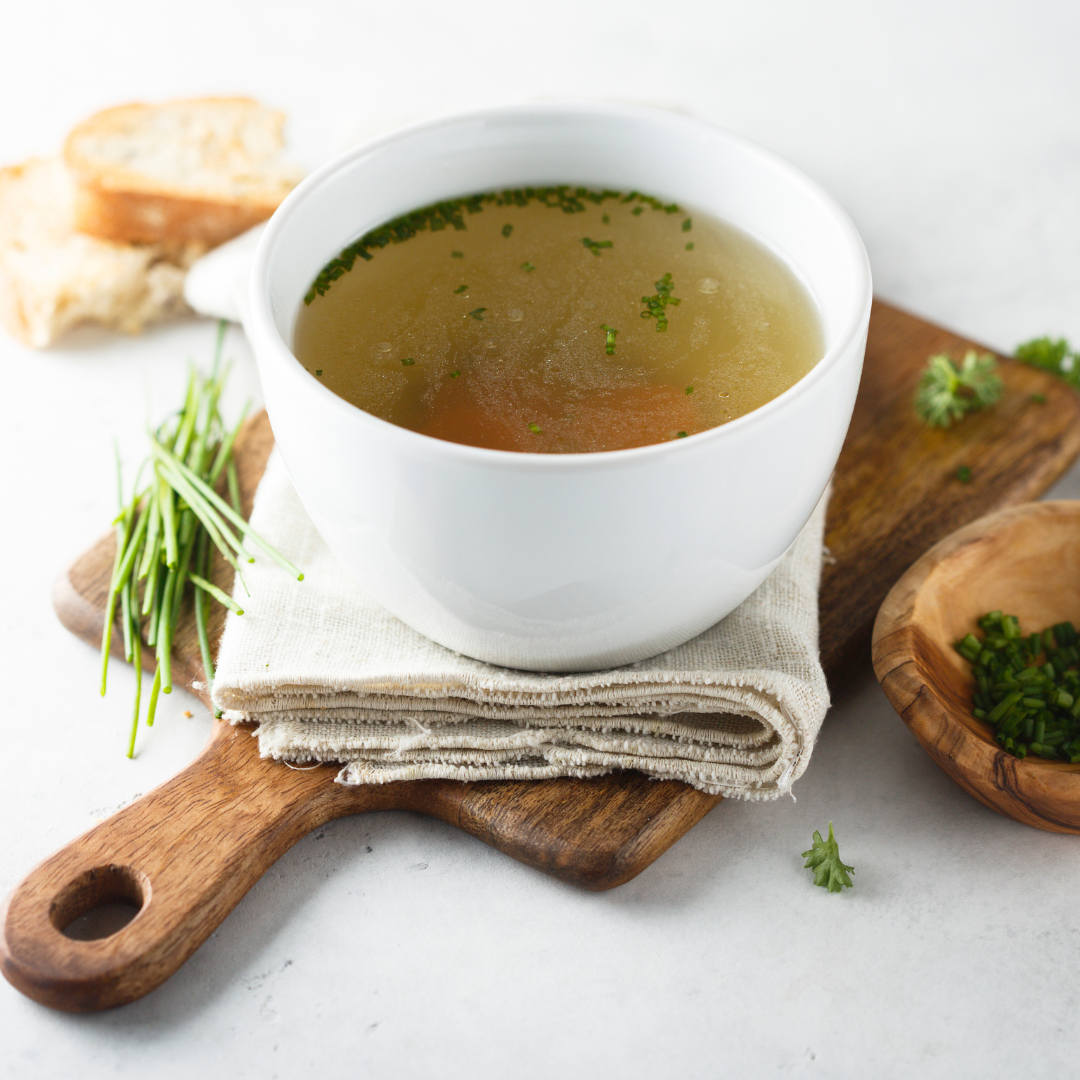
The kitchen habit that changes the quality of everything you cook — quietly, permanently, and for considerably less effort than you think.
Stock is the quiet background note in almost every good meal. It's the reason a simple soup from a good home kitchen outperforms the same soup made by a professional with better ingredients and more skill — because the professional's soup was built on a stock that took hours, and the homemade version was built on water and a cube that tasted of salt and not much else.
I am not, generally, an advocate for complicated cooking. Everything I write about food is built around the principle that nourishing yourself well should not require a culinary education or a Sunday afternoon you don't have. But stock is the one exception — the one kitchen project I will argue for firmly and without apology, because it is not actually complicated, it does not require much of your time, and the difference it makes to everything that follows is so significant that once you've tasted it you'll find it genuinely difficult to go back.
The technique is simple. The ingredients are mostly things you'd otherwise throw away. The effort is largely a matter of patience rather than skill. And the result sits in your freezer, ready to transform a Tuesday night dinner from something adequate into something your family asks about.
What stock actually is — and why it matters
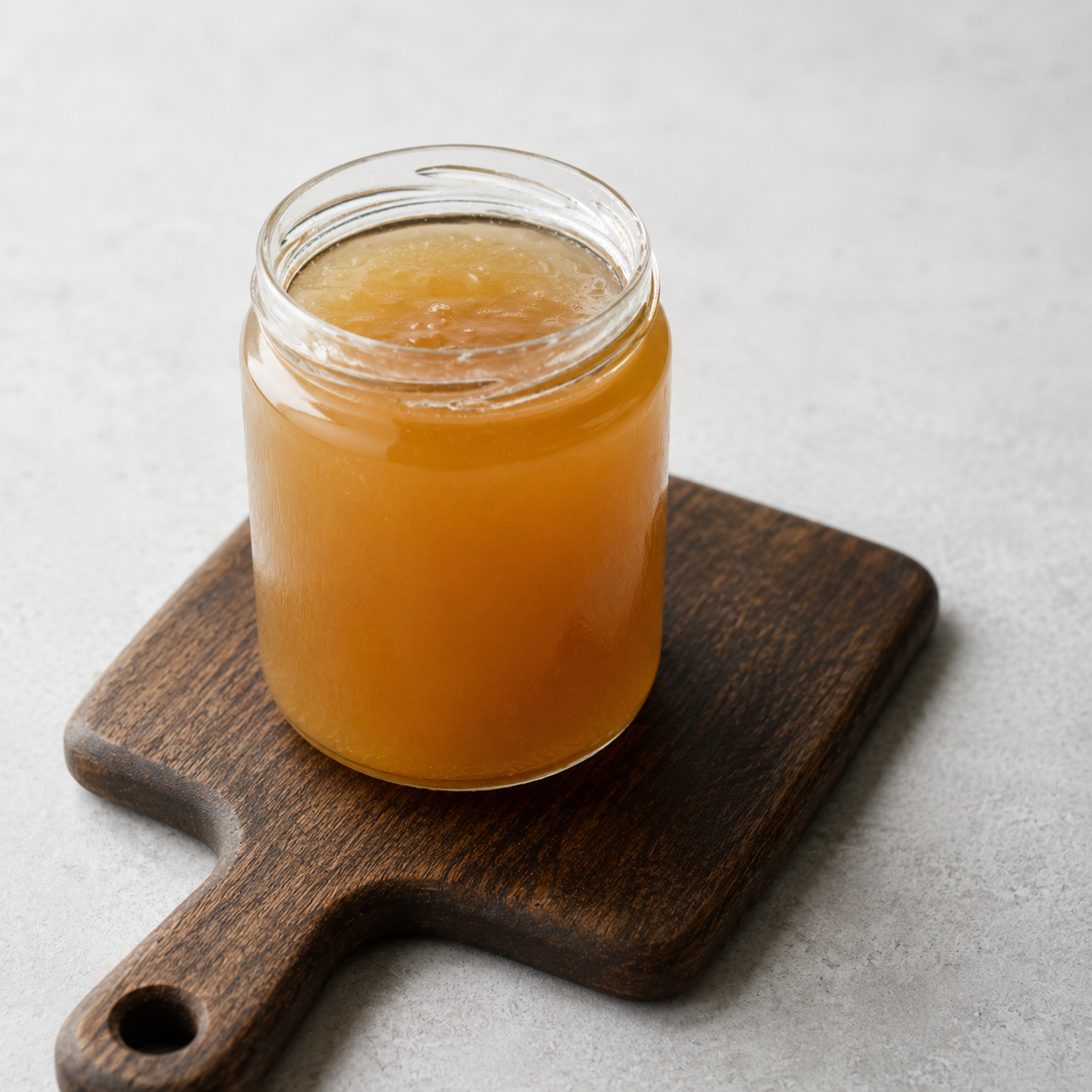
Stock is what happens when you simmer bones, vegetables, and aromatics in water for long enough that everything they contain — collagen, minerals, flavour compounds, gelatin — dissolves into the liquid. When it cools, a good chicken or beef stock should set to a loose jelly. That jelly is collagen that has converted to gelatin during the long, slow cook, and it is both what gives proper stock its silky mouthfeel and what makes it so nutritionally valuable.
The difference between stock and water in cooking is not subtle. Stock adds depth, body, and a complexity of flavour that no amount of seasoning can replicate in water-based cooking. A risotto made with good stock is a completely different dish from a risotto made with water and extra salt. The same is true of soups, braises, pan sauces, grains cooked in stock rather than water, and the kind of slow-cooked winter stews that form the backbone of nourishing cold-weather eating.
Stock is what separates a meal that tastes like something from a meal that tastes like nothing in particular.
It also happens to be one of the most nutritionally substantive liquids you can cook with or consume. The minerals that leach from bones during a long slow simmer — calcium, magnesium, phosphorus, and potassium among them — are in highly bioavailable forms that the body absorbs readily. The collagen and gelatin support gut lining integrity, joint health, and skin elasticity. The glycine, an amino acid abundant in properly made bone broth, supports liver detoxification, nervous system function, and sleep quality. This is not alternative medicine — it is the biochemistry of what happens when you apply time and heat to a chicken carcass.
The case for making your own
Purchased stock ranges from acceptable to actively misleading. The cartons labelled "stock" in most supermarkets are technically more accurate when described as flavoured water — they contain very little actual bone or gelatin, which is why they don't set when chilled and why they add flavour but not body to cooking. The better purchased stocks and bone broths — the ones sold in quality butchers or health food stores, often chilled rather than shelf-stable — are genuinely good and worth keeping on hand for convenience. But they cost significantly more than making your own, and they cannot quite replicate the depth of something made in your own kitchen from the carcass of last Sunday's roast chicken.
Making stock at home costs almost nothing. You are using the parts of the chicken or vegetables that would otherwise go into the compost — the carcass, the leek tops, the carrot peel, the celery leaves, the parsley stalks. The only additional ingredients are water and a small amount of aromatics. The time is almost entirely unattended — the stock simmers on the stove while you do other things. And the result, frozen in portions, is immediately available every time you cook for the next several weeks.
A few things that make the difference
Start with cold water. Adding the bones to cold water rather than hot draws out the collagen and proteins gradually, producing a clearer and more flavourful stock than starting with boiling water does. It is a small thing that makes a real difference to the final result.
Don't boil it. Stock simmers — a gentle, barely-there bubble that occasionally breaks the surface rather than a rolling boil. Boiling produces a cloudy, slightly bitter stock. Simmering produces a clear, clean one. The difference in flavour is noticeable and the difference in technique is simply a matter of watching the heat and keeping it low.
Skim the surface in the first twenty minutes. As the stock heats, grey foam rises — this is coagulated protein and impurities from the bones. Skimming it away produces a cleaner, clearer result. You don't need to be obsessive about it — a few passes with a wide spoon in the early stages is sufficient.
Don't salt it until you use it. Stock reduced for a sauce becomes much saltier than stock used as a base for soup. If you salt during making, you lose control of the seasoning in whatever you cook with it. Add salt to the finished dish, not the stock.
Freeze it in portions that match how you cook. Cup-sized portions are the most versatile — enough for a pan sauce or a grain cook, and easily combined when you need more for a big pot of soup. Freeze in zip lock bags laid flat until solid, then stand them upright to save freezer space. Label them with the date and the type of stock. You will thank yourself in three months.
When to make it
The most natural time to make stock is immediately after a roast chicken — the carcass goes straight into the pot while the kitchen is already warm and the oven has just been on. It takes five minutes to set up and then looks after itself. By the time you've cleaned up from dinner, the stock is halfway done. This is the rhythm worth building: roast chicken on Sunday, stock on Sunday evening, containers in the freezer by Monday morning.
The second best time is whenever you have accumulated enough vegetable scraps — the leek tops, onion skins, carrot peel, celery leaves, and herb stalks that build up across a week of cooking. A bag in the freezer designated for these scraps, combined with a few chicken bones from the butcher or from accumulated meals, produces a very good stock at minimal cost and effort. It is the kitchen equivalent of compound interest — small consistent inputs producing a meaningful result over time.
Winter is the season for stock. The house smells extraordinary while it simmers. The warmth it adds to the kitchen is welcome rather than oppressive. And the things you make with it — the soups, the stews, the braises, the warming bowls of grain cooked in something that tastes like it was made with care — are exactly what the season calls for.
A Really Good Chicken Stock
Everything you need to know about making the stock that changes the quality of everything else you cook.
Prep 10 min Simmer 3–4 hrs Makes 2–3 L Freezes 3 months
Ingredients
The bones
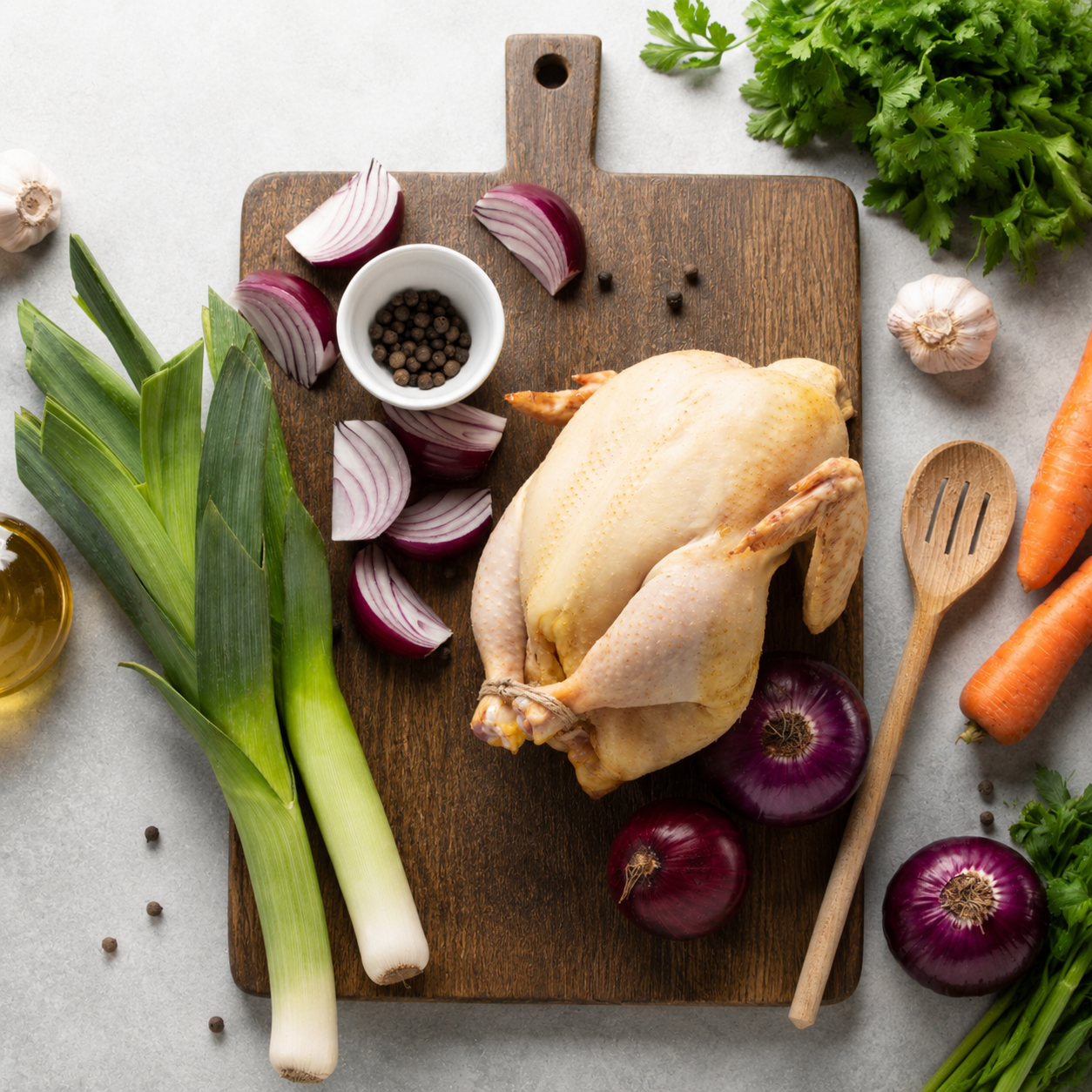
1 roast chicken carcass — or 1–1.5 kg raw chicken bones, necks, or frames from your butcher
2 chicken feet if available — optional but add significant collagen and body
The vegetables
2 medium onions, halved — no need to peel
3 stalks celery, roughly chopped — leaves included
2 medium carrots, roughly chopped — no need to peel
1 whole head of garlic, halved horizontally — no need to peel
1 leek, roughly chopped — green tops included
The aromatics
A small bunch of fresh parsley — stalks and all
4–5 sprigs fresh thyme — or 1 teaspoon dried
2 bay leaves
1 teaspoon whole black peppercorns
1 tablespoon apple cider vinegar — draws minerals from the bones
Cold water — enough to cover everything by about 5 cm
Method
Place the chicken carcass or bones into a large stockpot. Add the apple cider vinegar and cover with cold water — at least 3 litres. Let it sit for 20–30 minutes before turning on the heat. This step draws minerals from the bones before cooking begins.
Bring the pot slowly to a very gentle simmer over medium-low heat. As the water heats, grey foam will rise to the surface. Skim this away with a wide spoon or ladle — a few passes in the first 15–20 minutes is all that's needed. Don't rush this stage.
Once skimmed, add all the vegetables and aromatics. Do not add salt. Give everything a gentle stir and reduce the heat to the lowest setting that maintains a bare simmer — just the occasional bubble breaking the surface. This is important. Stock simmers; it does not boil.
Leave it alone. Simmer for a minimum of 3 hours, ideally 4. You can leave it for up to 6 hours on a very low heat. The longer it simmers, the more collagen converts to gelatin and the deeper the flavour becomes. You do not need to stir it.
When it's ready, strain the stock through a fine mesh sieve into a large bowl or second pot. Discard the solids — they have given everything they have. Do not press them through the sieve or the stock will cloud.
Allow the stock to cool to room temperature, then refrigerate uncovered overnight. The fat will rise and solidify on the surface. Lift it away the following morning with a spoon. The stock beneath should have set to a loose jelly — this means it is full of collagen and nutritionally excellent.
Portion into containers or zip-lock bags — cup-sized portions are the most versatile. Label with the date and freeze. Use within 5 days from the fridge or 3 months from the freezer.
A well-made chicken stock should set like a loose jelly when cold — this is not a flaw, it is the sign of a stock worth making. If yours doesn't set, it still tastes good. Simply simmer a little longer next time and consider adding chicken feet, which are extraordinarily high in collagen. Available from most good butchers and worth asking for specifically.
For more practical, nourishing recipes and simple wellness ideas delivered to your inbox each Monday, the Wellness for Everyday Living newsletter is free. → Subscribe here