Lemon Delicious Mug Cake
Let me say this plainly, because it sits at the heart of everything I write: feeling well was never meant to mean going without. A season of eating better is not a season of denial. It doesn't require removing every enjoyable thing from your kitchen, turning dessert into something virtuous, or convincing yourself that a piece of fruit is exactly what you wanted when what you really wanted was cake.
Something sweet belongs in an ordinary week.
Not because you've earned it. Not because you've exercised enough that morning or eaten particularly well at lunch. And not because you've found a version with fewer calories, less sugar or some other label that makes it feel more permissible. Simply because food is allowed to be pleasurable.
And this little lemon mug cake is exactly that sort of thing.
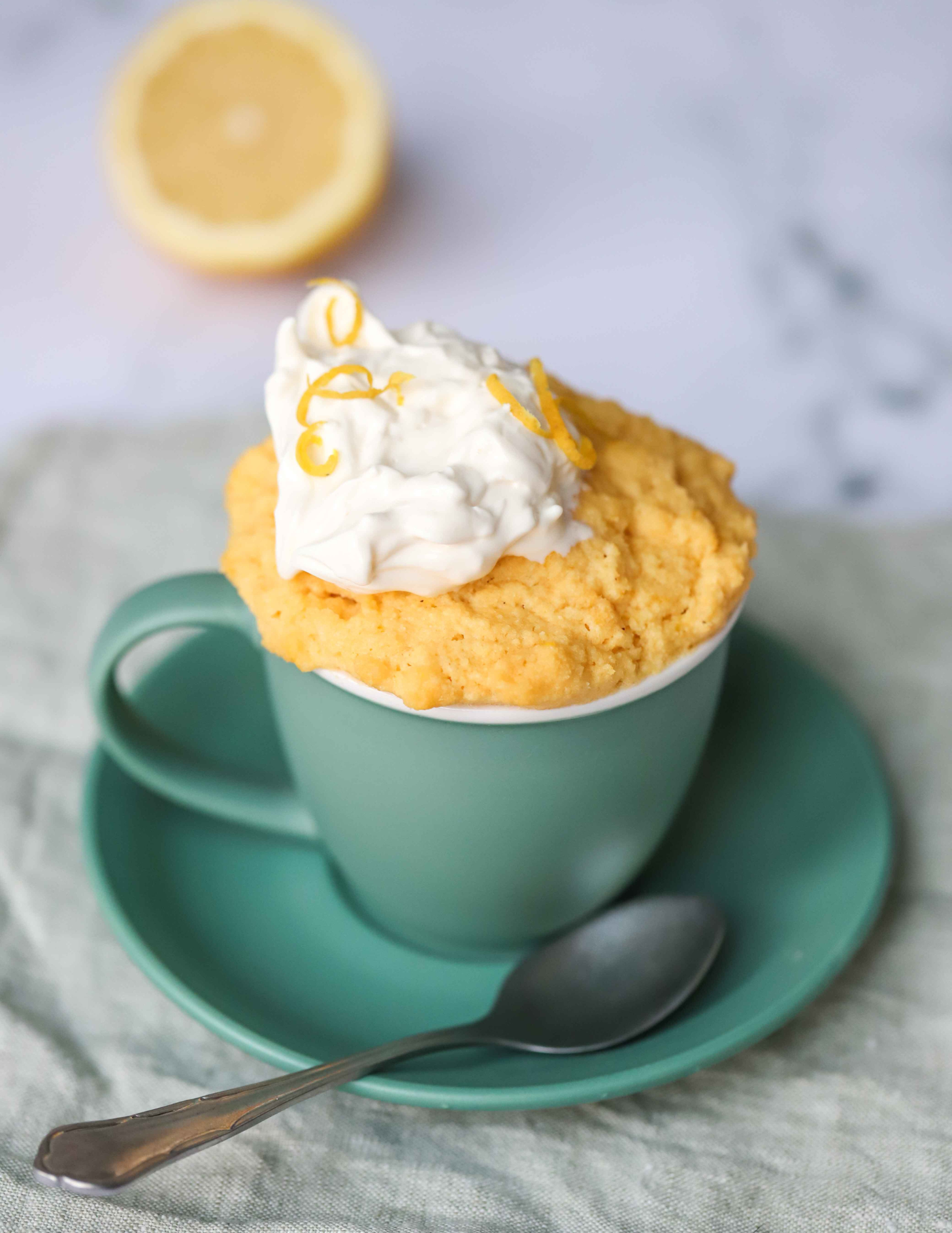
It's warm and soft, with plenty of fresh lemon and a cool spoonful of Greek yoghurt on top. It takes only a few minutes to make and, perhaps best of all, it makes exactly one. There is no cake sitting on the kitchen bench for the next four days. No baking tin to wash. No waiting for something to cool before you can eat it. No elaborate ingredients or afternoon spent baking. You stir together a handful of ingredients, spoon the mixture into a mug and, a couple of minutes later, you have a warm little cake to eat with your afternoon tea.
Sometimes that's all you need.
Something Sweet Can Still Be Nourishing.
I think we've made the idea of "healthy eating" unnecessarily complicated.
Somewhere along the way, nourishing ourselves became tangled up with restriction. Foods started falling into categories of good and bad, clean and indulgent, allowed and forbidden. And sweet food, in particular, became something we felt we needed to justify.
But a genuinely nourishing way of eating has room for pleasure.
It has room for vegetables and olive oil and lentils and salmon and bowls of oats in the morning. And it also has room for a warm lemon cake at three o'clock in the afternoon because it tastes lovely with a cup of tea.
Those things aren't contradictory.
In fact, I think the more satisfying your everyday food is, the easier it becomes to eat well consistently. You're not constantly waiting for the day when you can finally eat the things you actually enjoy. That's why I like recipes such as this one.
It isn't pretending not to be cake. It isn't trying to disguise vegetables as dessert or replace every ingredient with something supposedly more virtuous. It's simply a small, delicious cake made from a handful of good ingredients. And because those ingredients bring a little more substance than the typical flour-and-sugar mug cake, it also happens to be surprisingly satisfying.
That's a useful combination.
Why This One Loves You Back.
Most traditional mug cakes are built primarily from refined flour and sugar. There's nothing inherently wrong with enjoying those ingredients, but on their own they don't offer much in the way of staying power.
This cake is built slightly differently.
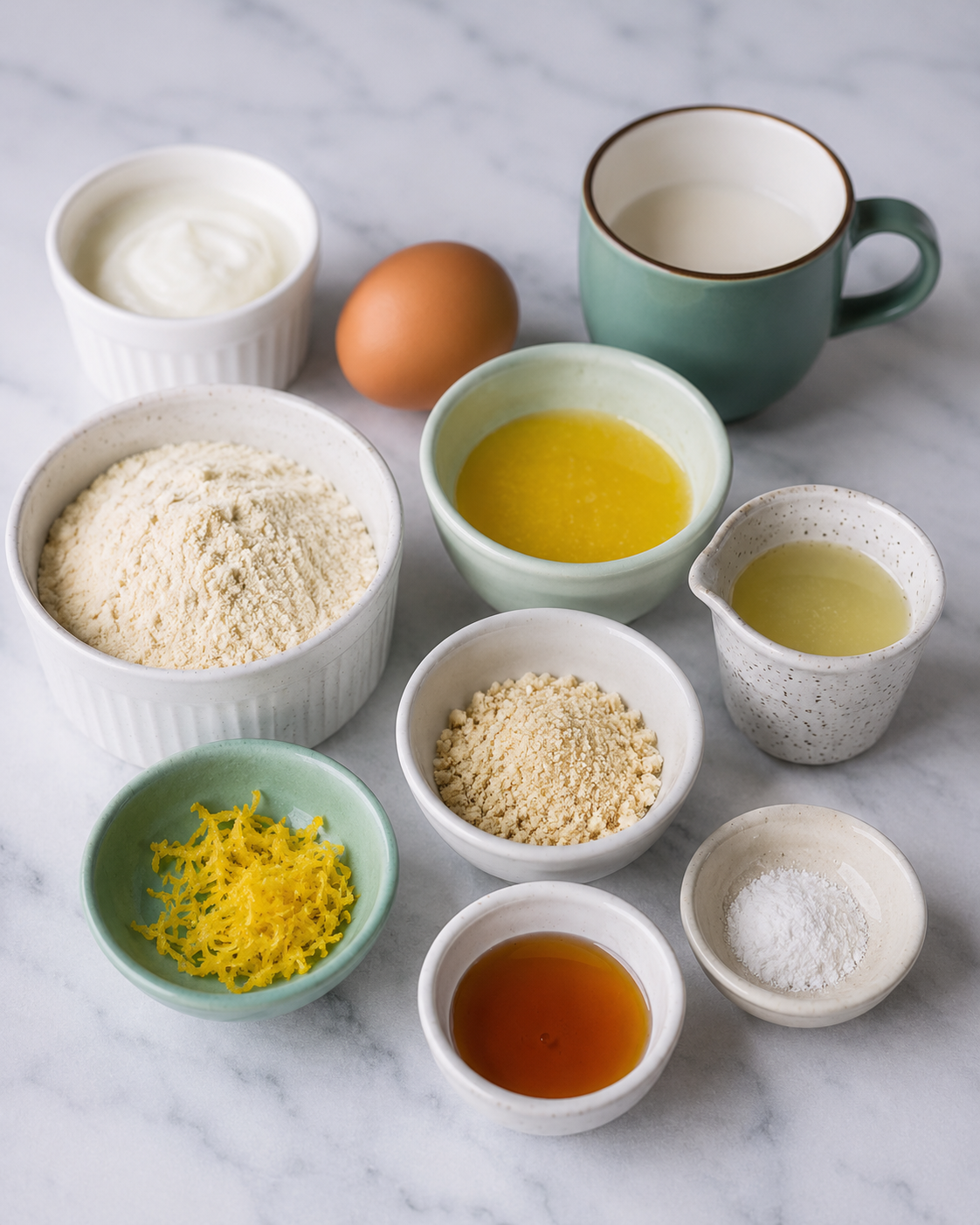
Coconut flour and ground almonds form the base instead of white flour. The coconut flour brings fibre and absorbs a surprising amount of liquid, while the ground almonds add richness and healthy fats and help keep the texture softer. There's an egg, too, which gives the cake structure while contributing some protein and fat.
Then there is the Greek yoghurt spooned over the top. It might look like a finishing touch, but it does more than make the cake pretty. Its cool creaminess is lovely against the warm lemon cake, while also adding a little extra protein and making the whole thing feel more substantial.
The sweetness comes from just two teaspoons of maple syrup or honey. That's enough.
Fresh lemon rind and juice bring so much flavour that the cake doesn't need to rely entirely on sweetness to make it interesting. The poppy seeds add their familiar gentle nuttiness and those tiny dark flecks that make lemon and poppy seed baking so recognisable.
Put everything together and you have something that tastes unmistakably like a treat but also has enough substance to leave you feeling satisfied afterwards. And that, to me, is far more useful than trying to make dessert disappear from your life altogether.
The Quiet Brilliance of a Cake For One.
There is something wonderfully practical about a single-serve recipe. Most cake recipes assume there is an occasion. They make eight, ten or twelve serves. They're wonderful when friends are coming over, when there's a birthday to celebrate or when you want something sitting on the kitchen bench for everyone to share.
But sometimes you just want cake. One serving. Today. That's where mug cakes earn their place.
You don't need to preheat the oven. You don't need to grease and line a tin. There is no cooling rack, no icing and very little washing up afterwards. You can decide at 3.15 that you'd like something warm and lemony with your tea and be eating it before 3.25.
That sort of ease matters more than we sometimes acknowledge.
One of the principles I come back to again and again is that looking after yourself needs to work on an ordinary Tuesday. If something requires enormous amounts of preparation, motivation or organisation, eventually real life gets in the way.
The same applies to food.
Useful recipes aren't always the elaborate ones. Often they're the little things you can make almost without thinking—the breakfast you know by heart, the soup you can make from whatever vegetables are in the fridge, the tray of vegetables you put into the oven while you're doing something else.
Or the tiny lemon cake you can make in a mug. Simple food is often what makes eating well sustainable.
Why Lemon Works So Beautifully Here.
There is something about lemon in baking that manages to feel both comforting and fresh.
Chocolate is rich. Caramel is deep and sweet. But lemon has brightness.
The zest carries most of the fragrant citrus oils, which is why that seemingly insignificant teaspoon of grated rind matters so much. As soon as the cake warms, those oils release and the whole thing begins to smell like lemon. Then the juice brings acidity.
That acidity balances the richness of the butter and almonds and cuts through the creamy yoghurt on top. It's also why the cake can get away with using relatively little sweetener—the flavour isn't relying on sweetness alone. If you can, use a fresh lemon rather than bottled lemon juice here. There are so few ingredients that the difference really does show. Grate the rind finely and only take the yellow outer layer. Once you reach the white pith underneath, stop; that's where the bitterness lives.
And don't skip the extra little scattering of zest over the yoghurt at the end. It takes seconds, but the fresh lemon aroma when you bring the mug towards you is part of what makes such a simple recipe feel special.
A Note on Sweeteners, Since You Might Wonder.
I've written this recipe with maple syrup or honey rather than the xylitol and other sugar substitutes that often turn up in recipes like this. It's a small choice, but a deliberate one. I prefer the flavour of real sweeteners, and a little genuine maple syrup or honey fits much more naturally into the way I like to cook and eat. The important word there is little.
You don't need to pour half a cup of maple syrup into something simply because it is technically different from white sugar. It's still there to sweeten the cake. Two teaspoons is enough here because the lemon, butter and almonds are doing their share of the flavour work. Maple syrup gives the cake a slightly softer, more neutral sweetness, while honey brings a little more character. Either works beautifully, so use whichever you already have in the cupboard.
There is no need to buy a special ingredient for one mug cake.
Coconut Flour Behaves Differently.
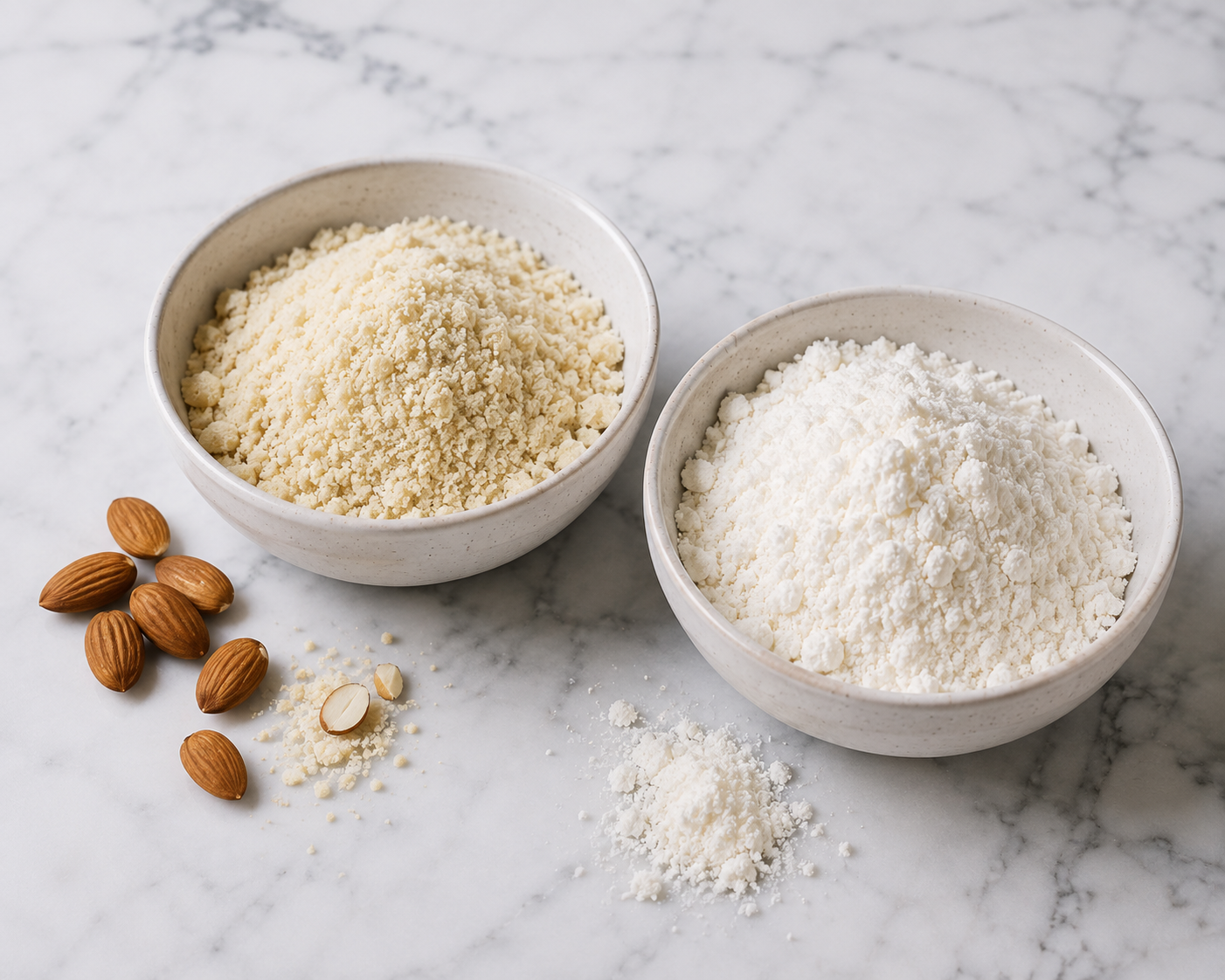
If you haven't baked with coconut flour before, it's worth knowing that it doesn't behave like ordinary flour. It is extraordinarily absorbent. That's why ¼ cup doesn't look like much when you measure it into the bowl but quickly thickens once it meets the egg, butter, almond milk and lemon juice.
Give the batter a proper stir and then allow it a moment to come together.
You're looking for a thick but spoonable cake batter. It shouldn't be dry or crumbly. If yours seems unusually stiff—and different brands of coconut flour can absorb slightly different amounts of liquid—add another teaspoon or two of almond milk. It's much easier to correct the texture before the cake goes into the microwave than afterwards.
Ground almonds help here too. They add moisture and richness and soften some of coconut flour's tendency towards dryness. Together, the two work particularly well for a quick cake like this.
Getting a Mug Cake Right.
Mug cakes have one great advantage and one small complication: they cook incredibly quickly. Two minutes can be the difference between beautifully soft and slightly overdone.
Microwaves vary considerably in power, so think of the cooking time in this recipe as a guide rather than an absolute rule. The first time you make it, keep an eye on the mug. The cake will rise as it cooks and should look set across the top when it's ready. You don't want a pool of wet batter in the centre, but you also don't need to keep cooking until the surface looks completely dry.
Remember that it continues to firm slightly during the thirty seconds it rests after coming out of the microwave. If you have a particularly powerful microwave, check it a little before the two-minute mark.
And use a mug with enough room for the cake to rise. A 1-cup (240 ml) heatproof mug works well, but don't pack the batter right to the rim.
Part of the charm is watching your tiny cake puff up inside the mug.
The Yoghurt Belongs on Top.
You could eat this straight from the microwave with nothing on it. But I wouldn't. The Greek yoghurt is one of those tiny additions that changes the whole experience.
The cake is warm, soft and lemony; the yoghurt is cool, thick and creamy. Put the two together and suddenly something that took a few minutes in the microwave feels much more like a proper dessert.
I like a generous spoonful rather than a decorative little dab.
Add it after the cake has rested for thirty seconds so it stays cool rather than melting immediately into the surface. Then finish with a little grated lemon rind and, if you like, another tiny scattering of poppy seeds.
And that's it.
No icing required.
Make the Pause a Part of It.
There is another reason I love recipes like this, and it has very little to do with nutrition.
They create a pause.
It's remarkably easy to move from breakfast to lunch to the end of the working day without ever really stopping. We eat standing at the kitchen bench. We drink tea while answering emails. We reach for something from the cupboard and barely notice we've eaten it. Making yourself a tiny cake interrupts that pattern.
Not dramatically.
It takes five minutes.
But you have to stop long enough to crack the egg, grate the lemon, stir the batter and make the tea.
Then, ideally, you sit down.
That small moment of attention is part of everyday wellbeing too.
Not everything that supports us has to be measurable. Sometimes it's simply giving yourself ten quiet minutes in the middle of an ordinary afternoon and eating something you genuinely enjoy.
A Few Notes Before You Make It.
Use a fresh lemon if you can, because both the juice and rind matter here. Let the melted butter cool slightly before whisking it with the egg. If it's piping hot, you risk beginning to cook the egg before the batter is mixed.
Once the dry ingredients go in, stir thoroughly so there aren't any pockets of coconut flour hiding at the bottom of the bowl. If the mixture looks too thick, add a splash more almond milk.
And don't overcook it.
You're aiming for risen and just set, not dry and springy. A mug cake is at its best eaten warm, shortly after it's made.
Which, conveniently, is exactly when you're going to want to eat it anyway.
THE RECIPE.
Serves 1 · 5 minutes prep · 2 minutes cook
Ingredients
2 tbsp butter, melted and cooled
1 egg
1 tsp finely grated lemon rind, plus extra to serve
¼ cup (25 g) coconut flour
1 tbsp ground almonds
1 tsp poppy seeds
2 tsp maple syrup or honey
½ tsp baking powder
1 tbsp almond milk, plus a little extra if needed
1 tbsp fresh lemon juice
2 tbsp Greek yoghurt, to serve
Method
Whisk together the melted, cooled butter, egg and lemon rind in a small bowl until combined.
Add the coconut flour, ground almonds, poppy seeds, maple syrup or honey, baking powder, almond milk and lemon juice. Stir well until you have a smooth, thick but spoonable batter. If it seems too thick, add another teaspoon of almond milk.
Transfer the mixture to a 1-cup (240 ml) heatproof mug, leaving a little room at the top for the cake to rise.
Microwave on high for about 2 minutes, or until the cake has risen and is just set in the centre. Depending on the power of your microwave, it may need slightly less time.
Remove carefully and leave to stand for 30 seconds.
Top with the Greek yoghurt, a little extra lemon zest and, if you like, a small scattering of poppy seeds. Eat while warm.
A Small Thing Worth Making.
This isn't the sort of recipe that asks you to overhaul the way you eat.
That's precisely why I like it.
It's one small thing you can make when you want something sweet. It uses ingredients you can recognise, takes about as long as making a cup of tea, and leaves you with one warm little cake rather than a kitchen full of washing up.
More importantly, it reinforces something I think we need reminding of: nourishment and enjoyment belong at the same table.
You don't have to make every mouthful perform a nutritional function. You don't have to justify dessert. And you certainly don't need to turn eating well into an endless exercise in removing things.
There is room for the salad and the cake. There is room for vegetables at dinner and something sweet afterwards. There is room for food that supports your body and food that simply makes an ordinary afternoon nicer—and very often, as with this little cake, the same food can do a bit of both.
So make the tea. Grate the lemon. Give yourself five minutes.
And eat the cake while it's still warm.
If you'd like more like this, I send a free letter each week on eating and living well without the fuss. You can join it here.