Lemon & Herb Roast Chicken with Spring Greens
There is something deeply useful about a dinner that looks after more than one meal. You cook it once, sit down to something warm and satisfying that evening, and then open the fridge the following day to find that lunch — or even the beginnings of another dinner — is already waiting for you. Roast chicken has always been particularly good at this, and this lemon and herb version is exactly the sort of meal I come back to when I want food that feels comforting without being heavy.
Bright with fresh lemon, garlic and herbs, and served with plenty of seasonal green vegetables, it is simple food rather than “healthy food”. Nothing has been removed, substituted or made virtuous for the sake of it. It is simply a generous plate of good ingredients: protein from the chicken, plenty of vegetables, olive oil, herbs and all that lovely flavour that develops as everything cooks together.
That is really the way I like to think about nourishment. Instead of continually asking what we should take away from our plates, it is far more useful to look at what we can add to them. More vegetables. Enough protein. Good fats. Herbs and flavour. Meals satisfying enough that we are not rummaging through the cupboard an hour later. This roast chicken does all of that without requiring much thought once it is in the oven.
Why Roast Chicken Deserves a Place in Your Week.
Chicken is an excellent source of high-quality protein, and getting enough protein becomes increasingly important as we get older. It helps maintain muscle mass, supports normal repair and recovery, and makes meals far more satisfying. Rather than treating protein as something that belongs only in shakes or carefully measured meal plans, I prefer to think of it as an anchor for an everyday meal. Start with a good source of protein, add plenty of vegetables, some good fat and, if you need it, a satisfying carbohydrate, and dinner is largely sorted.
Chicken thighs work particularly well here because they stay beautifully tender as they roast. They also have enough natural richness to flavour the vegetables around them, which means you end up with greens that taste as though they genuinely belong with the meal rather than having been added at the last minute because you felt you should eat some vegetables.
If you prefer chicken breast, you can certainly use it, although you will need to watch the cooking time more carefully so it does not dry out. A small whole chicken is another lovely option, particularly at the weekend when you know you will make use of the leftovers over the next couple of days.
Make the Greens Something You Want to Eat.
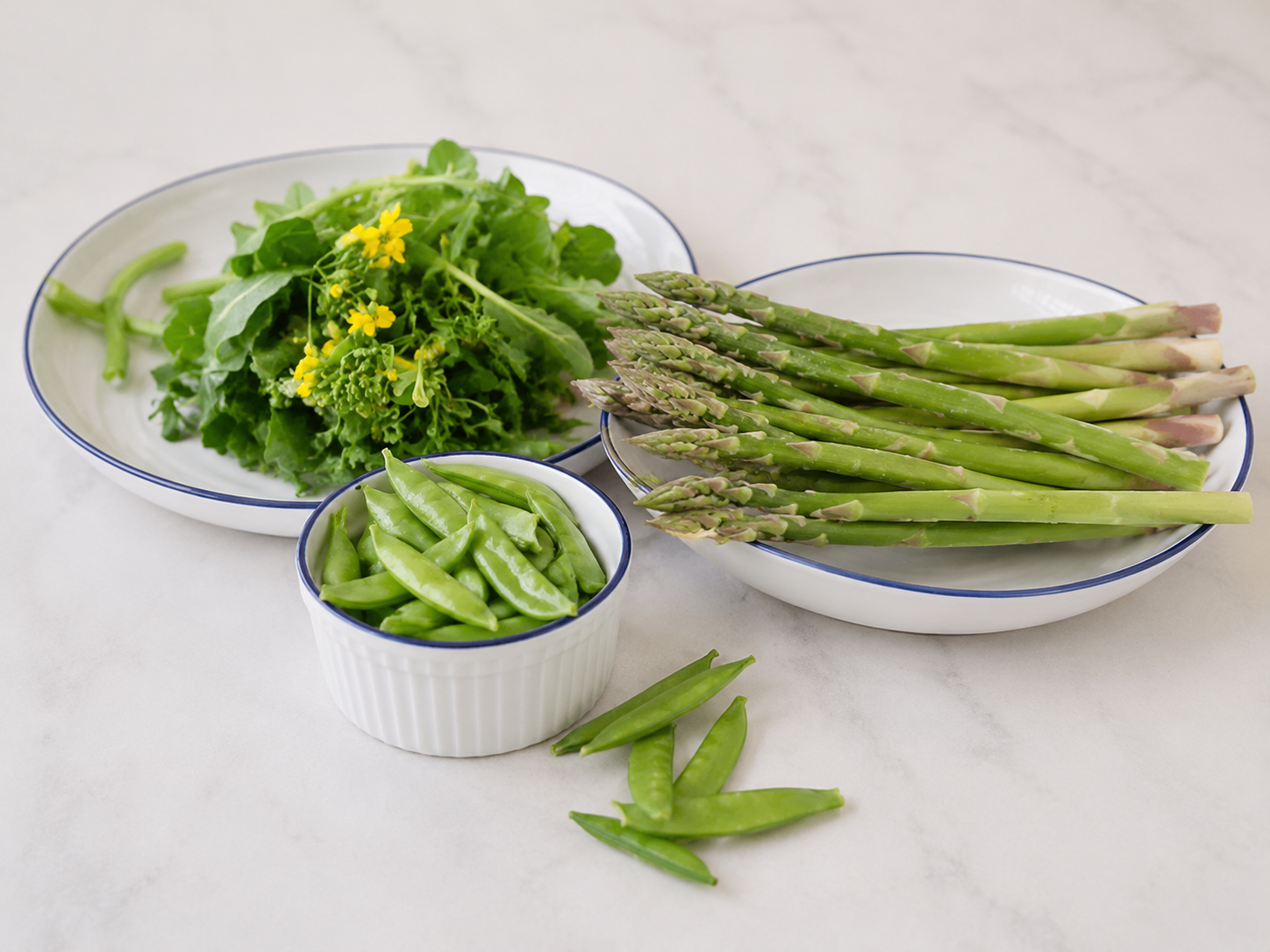
The spring greens are every bit as important as the chicken in this recipe. Asparagus, broccolini and green beans all work beautifully, but there is no need to buy three different vegetables simply because the recipe says so. Use what is fresh, affordable and good where you live.
Green vegetables bring fibre along with an array of vitamins, minerals and naturally occurring plant compounds. But their nutritional credentials are only useful if we actually want to eat them, which is why I am far more interested in making vegetables delicious than making them obligatory.
Here, the greens pick up the lemon, herbs, olive oil and savoury juices from the chicken as they cook. Adding them towards the end means they soften and develop flavour while still keeping some freshness and colour. If you prefer your greens particularly crisp, you can steam them separately and spoon a little of the roasting juices over them before serving.
This is also a good reminder that vegetables do not have to be steamed and served plain to “count”. Olive oil, herbs, garlic, lemon, spices and roasting are all useful tools. When vegetables taste good, putting more of them on the plate becomes something you naturally want to do rather than another wellness rule to remember.
Lemon and Herbs Do the Heavy Lifting.
There are very few ingredients that can transform a simple tray of chicken quite as easily as lemon, garlic and fresh herbs. The lemon brings freshness and acidity, while thyme and rosemary add that unmistakable roast-dinner aroma without requiring a complicated marinade or long list of seasonings.
I like using lemon at two stages. Some goes onto the chicken before roasting, where it mingles with the garlic, herbs and juices in the pan, and then a little fresh lemon goes over everything just before serving. That final squeeze makes an enormous difference. It wakes up all the flavours that have mellowed during roasting and stops the finished dish from feeling too rich.
This is one of those small cooking habits worth remembering beyond this particular recipe. If a finished savoury dish tastes as though something is missing, it does not always need more salt. Sometimes it simply needs a little acidity — lemon juice, lime juice or a splash of vinegar — to bring everything into focus.
A Dinner You Can Make Your Own.
Although I have called this Lemon & Herb Roast Chicken with Spring Greens, the basic idea can move easily through the seasons. In spring, asparagus, broccolini and beans make sense. In cooler weather, you might roast carrots, pumpkin, cauliflower, Brussels sprouts or parsnips alongside the chicken instead. In summer, you could serve the same lemony chicken with a large crisp salad.
If you would like a more substantial dinner, add some new potatoes to the roasting tin from the beginning. They will become golden around the edges and soak up the chicken, lemon and herb juices as they cook. Sweet potato would work too, or you could serve the chicken with brown rice, quinoa or a slice of good wholegrain bread.
That flexibility is useful because a recipe becomes much more valuable when you can adapt it to what you already have. You should not need to buy an entirely new collection of ingredients every time you cook dinner. A good everyday recipe gives you a structure and then allows your fridge, the season and your appetite to fill in the details.
The Real Gift is Tomorrow's Meal.
One of the easiest ways to make eating well feel less demanding is to stop expecting yourself to cook every meal from scratch. If you are turning the oven on and roasting chicken anyway, it makes sense to cook enough to leave something behind for tomorrow.
Leftover chicken is particularly useful because it can become something completely different with very little effort. Shred it through a salad with leftover greens, add it to a grain bowl, tuck it into a wholegrain wrap, or use it as the beginning of a simple soup. If there are roasted potatoes left as well, lunch is practically finished before you begin.
This is the kind of gentle structure that makes a difference over a week. It is not elaborate meal prepping or spending Sunday afternoon filling a row of identical containers. It is simply cooking a little more while you are already cooking and allowing tonight's effort to make tomorrow easier.
And on those evenings when you are tired, hungry and tempted to reach for whatever requires the least thought, having good food already waiting in the fridge changes the decision entirely. Convenience does not have to come from a packet; sometimes it comes from what you cooked yesterday.
A Few Notes Before You Cook.
Chicken thighs are probably the easiest option for this recipe because they are forgiving and remain juicy, but cooking times will vary depending on their size and whether they are bone-in or boneless. Rather than relying entirely on the clock, make sure the chicken is cooked safely through at the thickest part before serving.
If you are using a whole chicken, allow considerably more cooking time and follow the cooking guidance appropriate for its weight. Letting the chicken rest before carving or serving is worth the few extra minutes because it helps the meat retain its juices.
The vegetables should go into the roasting tin much later than the chicken. Spring greens cook quickly, and adding them too early will leave you with very soft, dull vegetables. Eight to ten minutes is generally enough, depending on what you use and how thick it is. Toss them gently through the pan juices when they go in so that they pick up all that flavour.
Most importantly, do not make the recipe more complicated than it needs to be. Chicken, lemon, garlic, herbs, olive oil and fresh vegetables are doing almost all the work. Give them enough seasoning, cook them well and let them taste like themselves.
The Recipe
Serves 4 · 10 minutes prep · approximately 40 minutes cook
Ingredients
4 chicken thighs, preferably bone-in, or 1 small whole chicken
1 lemon, halved
2 cloves garlic, crushed
A few sprigs fresh thyme
A few sprigs fresh rosemary
2 tbsp extra virgin olive oil
1 bunch asparagus
1 bunch broccolini
150 g green beans
400 g new potatoes, optional
Sea salt and freshly ground black pepper
Method
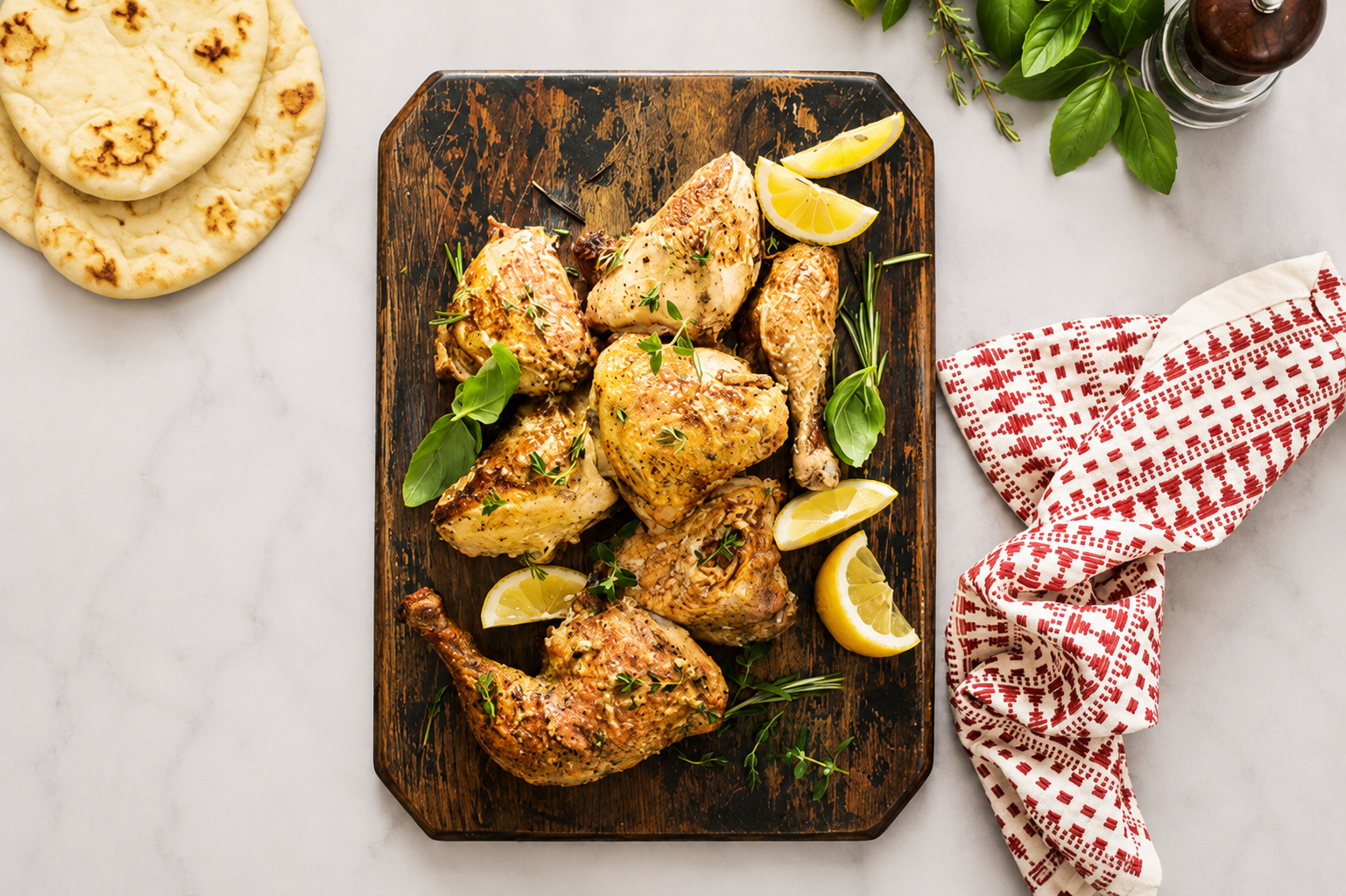
Preheat the oven to 200°C (400°F). Arrange the chicken in a roasting tin. Squeeze over the juice from half the lemon, then tuck the squeezed lemon, garlic, thyme and rosemary around the chicken. Drizzle with the olive oil, season generously with salt and black pepper and turn the chicken gently so it is coated.
If using new potatoes, add them to the roasting tin around the chicken and toss them lightly through the olive oil and seasonings. Roast for approximately 35–40 minutes for chicken thighs, or until the chicken is golden and completely cooked through. If using a whole chicken, adjust the cooking time according to its weight.
Trim the asparagus, broccolini and beans. During the final 8–10 minutes of cooking, add the vegetables to the roasting tin and gently toss them through the lemony roasting juices. Return the tin to the oven until the vegetables are just tender but still bright.
Remove the chicken from the oven and allow it to rest for a few minutes. Squeeze over the remaining lemon, add a final grind of black pepper and serve with the roasted greens and potatoes, if using. Spoon a little of the pan juices over everything before serving.
The Kind of Dinner Worth Returning To.
There is nothing particularly complicated about this meal, and that is exactly why I think it belongs in an everyday repertoire. It gives you good protein, plenty of vegetables and satisfying flavour without asking you to spend the evening standing over the stove. The oven does most of the work, the ingredients are familiar, and there is enough flexibility to make it with whatever vegetables happen to be good that week.
More importantly, it is the sort of dinner that reminds us that eating well can still look like a proper plate of comforting food. It can be golden roast chicken and potatoes, vegetables glossy with pan juices, plenty of lemon and herbs, and perhaps enough left over to make tomorrow a little easier.
That is the kind of nourishment I want more of: food that tastes good, leaves you satisfied and fits naturally into an ordinary week. No special rules and no need to make dinner into another project. Just a good meal, made from good ingredients, with enough generosity built in to feed you again tomorrow.
If you'd like more recipes and practical ideas for eating and living well without making either more complicated than they need to be, I send a free newsletter each week. You can join me there for simple nourishment, seasonal recipes and gentle ways to bring a little more structure to everyday life.
↓ ↓